



“It’s scaffolding for the skin.” “We lose 1% every year.” These are the common tropes wheeled out when the blogosphere narrows its gaze on collagen. If you’re here, it’s unlikely that you’re only just switching on to the fact that your natural collagen stores are declining. You probably already know how to take collagen, and what collagen is (if not the links are there). But what are the actual benefits of collagen supplements? Because collagen ain't cheap, and nobody is eating gristle and gut lining on sourdough for breakfast.
So here are 10 benefits that make us think it’s worth the investment, based on the strongest research available.
How does collagen work?
We’d love to give you a one-sentence answer. But this is a growing area of research, and the mechanisms are still being debated. It’s easy to get tied in knots on what research is most valid, which is fair. The reality is that only brands can afford to fund this kind of work (as it’s not life-limiting research). So here’s what we do know.
Hydrolysed collagen is made up of peptides (partially broken down proteins) absorbed into the bloodstream via the small intestine, much like any other protein. There are two ways it may increase collagen formation in the body.
-
The more research-supported route: ingested collagen provides amino acids that act as building blocks for connective tissues such as skin, cartilage, and bone.
-
The more contested route: ingested collagen may signal to the body to produce more of its own, stimulating the collagen-producing cells in skin and cartilage to produce more of its own collagen.
There’s also emerging research suggesting that one of the benefits of collagen may be that it reduces inflammation in areas of high wear, potentially protecting against the breakdown of cartilage and alleviating symptoms of conditions like osteoporosis, though this is also hotly contested.
Our advice: don’t get hung up on what the scientists don’t know yet. Be patient, it takes between 8 and 12 weeks for visible results. Hundreds of our customers tell us it’s been the difference for them.
Is collagen good for you?
Real talk. The endless marketing and the influencer hype throw us off. When we really should be asking: do we really need collagen? What really are the benefits of taking collagen?
Yes. Collagen isn’t a synthetic substance. It’s naturally found in food, so we could just eat it. It’s just that we’re no longer eating the cuts of meat our ancestors used to gnaw on. Collagen isn’t magic either, but the evidence is mounting.
Most insta-famous for improving things like your skin, hair and nails, there are plenty more benefits aside from your looks. Your mobility, gut and 90-year-old self carrying in the shopping will all appreciate it (unless you can afford staff, we can't).
Collagen research gets heat for being poorly designed (not always fair) or brand-funded (often fair, but a sad reality of how much research gets funded). But there are reputable sports science studies protecting our tendons and improving sports performance. A meta-analysis of research found skin elasticity to be a consistent finding, along with more meaningful benefits like joint pain relief and support for osteoporosis.
And beyond the aesthetics? Your mobility, gut, and ability to bring the shopping in without wincing in your 90s will all appreciate it.
What's in collagen supplements?
Collagen comes in different types, and if this is sending you down a decision tree, we’ve made an explainer for how to choose the right collagen. But if you’re here for the basics, here’s an explainer for those without a biochemistry degree (ourselves included).
Collagen supplements (we only make powders, but other brands sell capsules) typically contain hydrolysed collagen peptides. These are tiny molecules of collagen broken down into small particles so that the body can easily absorb them. They consist of three main amino acids: glycine, proline, and hydroxyproline. The raw materials the body uses to form connective tissue.
The types come from different places in the body.
Type I – skin, hair, bones, ligaments
Type II – cartilage
Type III – organs, skin, muscles, blood vessels
Different sources have different concentrations of each type. Marine collagen, like our Skinful, is great for skin (it's in the name) because it's got lots of Type I from oily fish skin. Or try Skinful with Vitamin C if you're after some extra antioxidant support.
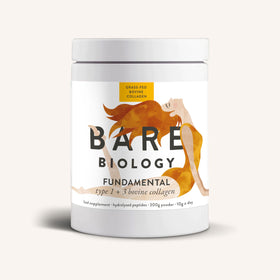
Bovine has lots of Type I and some Type III, because there's plenty of both in cows. Grisly, but there we are. Our Fundamental bovine collagen might suit you better if you're looking to give your body a bit more oomph, supporting joints, muscles, and all the internal bits.
Take a look at our blog on decoding collagen supplement labels. It breaks down all the key information you need so you can make a more informed decision before you buy.
1. Improved skin health
The benefit you might have come here for. Well. It’s true, as we age, collagen levels naturally decline. You might start to notice your skin feeling less resilient, and the appearance of fine lines and wrinkles or a little sagging around the neck. You’re right, it’s not fair.
Taking collagen gives your body the raw ingredients it needs to produce more of its own. Collagen peptides are short chains of amino acids that are easily absorbed. Studies have found they can improve skin hydration and elasticity, which in turn reduces the appearance of fine lines and wrinkles.
Collagen is also particularly useful for healing damaged skin, especially if you’re suffering from eczema, skin infections, acne, scarring or burns.
To get the most out of your collagen powder for skin health: combine it with vitamin C, zinc and copper, alongside adequate protein overall. These are the ingredients involved in the collagen production process. Vitamin C is also a handy antioxidant that helps protect skin cells from further damage.
The bottom line: Collagen may help to keep your skin hydrated. Which helps to protect it from damage and heal. Especially when taken consistently and paired with a diet that supports it.
2. Joint pain relief
Our joints take a beating. This is where the evidence for the benefits of collagen is strongest. Collagen has been shown to relieve pain and improve joint function in people with osteoarthritis as well as athletes.
In osteoarthritis, the cartilage within a joint begins to break down, causing bones to rub against each other, resulting in structural damage and pain. Type II collagen is one of the main proteins in cartilage, so it makes sense that adding more of it to your diet via food or supplements may be of benefit. Studies suggest that collagen supplements may improve osteoarthritis symptoms, possibly by providing building blocks for cartilage and supporting its maintenance, which may slow further degeneration, especially in women.
So one of the key collagen benefits for women who are very active, or whose joints are under much higher pressure, is its potential to support cartilage. Increased strain can lead to wear, especially in the knees and collagen supports the production of cartilage, making it a really useful tool for the prevention or treatment of sports-related injuries. It may even support recovery from surgery.
The bottom line: Collagen is increasingly being adopted by sports professionals for its support to joints and mobility by providing building blocks for healthy cartilage.
3. Strong bones
Collagen is for skin and bones. It’s a major constituent of bone mass. Studies have shown that collagen peptides can significantly increase the organic substance of the bone. It’s particularly relevant for women because, together with oestrogen levels falling, our bone density decreases alongside our collagen naturally declining. In other words, women really need to look after their bone health.
So one of the big benefits of collagen powder for women is that it may help to support the production of new bone tissue.
The bottom line: Collagen makes up a large part of our bone structure, and supplements may help support bone strength, especially as we age.
4. More muscle mass
Collagen is an important component of skeletal muscle, and studies suggest that collagen supplements help boost muscle mass, particularly in older people managing the natural loss of muscle that comes with age.
In one 12-week study, older men who took 15g of collagen daily while following an exercise program gained significantly more muscle mass and strength than those who exercised without it.
Researchers suggest collagen may promote the synthesis of muscle proteins, including creatine, and stimulate muscle growth after exercise. If you didn’t already know, collagen is a protein, the building blocks of muscle. So if you’re struggling to reach your protein intake (who isn’t?), collagen is a useful addition.
The bottom line: As a protein source, one of the benefits of a collagen supplement is that it may help support muscle maintenance and growth, particularly when combined with regular exercise.
5. Better gut health
Your tummy needs collagen, too. There's growing evidence that collagen may also support gut health and digestion.
Collagen contains amino acids (glycine, proline, and hydroxyproline) that may help reduce inflammation in the gut lining. Inflammation is often the underlying issue for many digestive issues, including bloating, gas, and constipation.
There's also some evidence that collagen may support gut health by improving the integrity of the gut lining, that barrier that stops harmful substances from entering the bloodstream. Sometimes referred to as leaky gut (yum). When that barrier is compromised, it can trigger an immune response and widespread inflammation. Collagen may help to support the structural proteins that keep it intact.
Then there’s the gut bacteria that everyone loves to talk about. Studies suggest glycine may help to increase the production of stomach acid and digestive enzymes. Improving how we break down and absorb nutrients, and supporting the growth of more good gut bacteria.
More research is needed to fully understand the role of collagen supplements in promoting gut health, but it’s a promising addition to the benefits you may already expect in your skin and joints.
The bottom line: Collagen contains amino acids that may help support a healthy gut lining, reduce inflammation, and maintain healthy gut bacteria.
6. Supports hair and nail strength
This is the benefit your hairdresser spots before you do. And actually it’s a bit more complex than you’d expect.
One of the reasons hair and nails start to feel less strong as we age is that, like your skin and tendons, they need collagen to grow. And as levels naturally decline over time, hair might start to thin or lose its texture and nails might become brittle and grow more slowly (it goes on, we know). These areas tend to show it first because the body prioritises its available collagen to more essential areas, like our arteries, bones and connective tissues (clever).
Collagen is directly deposited in the hair follicles, so by supplementing with collagen peptides, you’re giving the body enough to go around.
It’s the same for nails. In one study, participants who took a 2.5-gram daily collagen for 24 weeks enjoyed a 12% increase in nail growth and a 42% drop in broken nails.
The bottom line: Collagen peptides may help support stronger, healthier-looking hair and nails by topping up the amino acids the body uses for growth.
7. Healthier heart
It sounds far-fetched, but it makes sense when you learn that collagen is a critical structural component of blood vessel walls. It provides the amino acids that keep them elastic. As levels naturally decline, vessels can become stiffer, which, further up the chain, puts pressure on the heart and is associated with increased cardiovascular risk. One study found that collagen powder successfully increased blood vessel elasticity in participants over six months.
Research on exactly how collagen might help the heart is still emerging. But increasingly, collagen is being looked at for its potential to reduce inflammation, especially in the heart, where conditions are affected by inflammation, which can damage blood vessels and contribute to the buildup of plaque in the arteries, narrowing and hardening them over time.
The bottom line: Early research suggests collagen may help support healthy blood vessels, but more evidence is needed before firm conclusions can be made.
8. Sleep
Collagen for sleep? Come off it. Hear us out. Hidden inside collagen is a sleep supplement that most people pay for separately. Glycine is one of the amino acids in collagen, and it supports the nervous system. Here’s the interesting bit: in animals, it acts on the hypothalamus to reduce core body temperature (a big-deal brain-body signal for initiating sleep). Human studies show similar effects (now we’re talking), with improved sleep quality and even greater "liveliness and peppiness" the next day.
If you went out and bought glycine, you’d typically get around 1g per serving. Studies looking at sleep tend to use around 3g. Our Fundamental has 2.06g, Skinful has 2.78g per 10g serving. So there’s already enough glycine hiding in your collagen. Try taking it in the evening.
The bottom line: Whilst collagen won’t knock you out, research suggests the glycine it contains may help support the nervous system, and the temperature signals the body uses to initiate sleep.
9. Reduced recovery time
Collagen might make recovery feel less frustrating. If you’ve been white-knuckled and committed to your fitness goals, but your body is starting to creak, collagen might be the answer to protecting you from injury and keeping you on plan.
A randomised study investigating female elite athletes found that collagen combined with vitamin C helped tendons get stronger over an 8-week training period. The collagen group saw greater increases in tendon cross-sectional area (they got thicker) and a greater increase in rate of force development (they were like springboks… ish).
Collagen contains amino acids that support the growth of connective tissue in muscles, joints and tendons. Increasing collagen levels may help the body restore the fibres that break down during heavy sessions.
The bottom line: Collagen may help support faster recovery by providing amino acids that assist in repairing muscles, tendons, and connective tissue after exercise or minor injuries.
10. Overall well-being
Say you’re not that fussed about your skin, hair, and nails. You’re not an aspiring sports star, you’re not healing from surgery, and you don’t have an underlying heart condition. Do you really need collagen?
Collagen isn’t the obvious general health supplement most people think to invest in. But it’s an excellent source of the amino acids that support many of the systems, structures and functions in the body that keep us moving. No, it’s not a complete protein. But it does contain the amino acids that are hard to find elsewhere.
Physiotherapist and PT Tim Blakey thinks collagen is good for something far more important than your skin.
"Most people know collagen for hair, skin, nails, and gut health. But what I like the most is the amino acids glycine, proline, and hydroxyproline, which are hard to find in other protein sources. They are very good for joint health and connective tissue, and keeping my clients’ joints supple and healthy so they can move how they did when they were younger and get strong at the same time."
One of our favourite tips from Tim: for his busiest clients, especially women squeezing in a session before the school run. Dragging yourself to a workout on shaky legs and a whiny stomach isn’t the protocol for consistency. And for women mid-meno-mania, fasted sessions are a surefire way of spiking that AM cortisol into oblivion.
A scoop of collagen, like our Fundamental in your coffee breaks your fast without the overthinking. It gives your metabolism something to work with, and your joints and connective tissue the amino acids your granola was never going to.
The bottom line: Collagen may help support overall well-being by contributing to the health of skin, muscles and connective tissues as part of a balanced lifestyle.
How to take collagen powder
There’s not really a knack for how best to take collagen. The only science, really, is your own body and its natural rhythms and requirements based upon the unique life you lead. Nevertheless, everybody likes a guide to set sail with when bringing something new into their diet. So here’s our top tips for taking collagen:
1. Choose the right type: Collagen comes in various forms, including powders, capsules, and liquids. The most common types of collagen are bovine (cow) and marine (fish) collagen. Bovine collagen is made by extracting collagen from cow hides, whereas marine collagen is a dietary supplement made by extracting collagen from the bones, skin or scales of fish. Hydrolysis is the gold standard of extracting collagen. This process of extraction breaks collagen down so that it is easier to digest and absorb, maximising the benefits of collagen at the same time as going easy on your digestive system.
Marine collagen is composed almost entirely of type I collagen, which is the primary collagen found in the human body and is particularly great for skin. Bovine collagen consists of approximately 95% type I and 5% type III collagen. Type III supports connective tissue, so bovine collagen is often labelled an 'all-rounder' and sometimes suggested for full-body strength and recovery.
Annoyingly, it's hard to define a clear difference between the two because there are no direct studies comparing them, so even science doesn't give us a concrete direction to guide us.
What we do know: both our marine and bovine are highly bioavailable and absorbable collagen powders, so the best option is the one that fits your personal preference on taste, sourcing, values, lifestyle, and of course how you feel your body responds.
2. Get your serving size right: The amount of collagen powder varies depending on the product and the individual's needs. A typical amount is around 5-10 grams of collagen per day.
3. Timing: The best time to take collagen powder is on an empty stomach, as this helps the body absorb collagen more effectively. So take it first thing in the morning or at least two hours after a meal if you can.
4. Mix it well: If you're taking collagen in powder form, mix it well with a liquid, such as water or a smoothie. This ensures that the collagen is evenly distributed and fully dissolved. You can also add it to hot drinks, stir it into your morning coffee or matcha (two birds, one stone).
5. Consistency is the thing: to see the best results, you really need to take collagen powder regularly. To make the habit stick, take collagen at the same time each day.
6. Don’t give up: Collagen powders take time to work, and it may take several weeks or even months to see noticeable results. Give your body time to absorb and use the collagen.
The bottom line on navigating the world of collagen, from a scientist whose research focuses on collagen supplementation:
“If you’re taking collagen regularly, staying hydrated, and getting enough vitamin C (which helps collagen formation), you’ll likely see benefits for your skin, joints, or other tissues over time—regardless of whether it comes from fish or cows.”— Dr Shiloah Kviatkovsky (Ph.D, CISSN)